Frequently Asked Questions - Recertification

Frequently asked questions about CBUNA recertification

How do I know if contact hours are from an approved provider?

This is usually printed, usually in small type towards the bottom of your certificate. It should give you the provider, accrediting company, and the number of contact hours. If the information is not available on the certificate, it may be available on the provider's website.

Do you want copies of my contact hour (CE) certificates?

No, do not upload copies of your CE certificates when you submit your application but please retain them in your records. If your application is selected for random audit, copies of your certificates will be requested at that time.

I have more than the 36 required contact hours, should I include them?

It is not necessary to include anything over 36 contact hours.

Can contact hours provided by my hospital count?

If your hospital is accredited by an approved provider, you can claim the contact hour. ALL hours must be urologic.

Are there websites that offer urologic-specific contact hours?

Yes, in fact there are many different sites. Some sites are free or charge a minimal fee. Other ANCC-approved providers also offer online/home study continuing education that may be appropriate for urologic credit. CBUNA does not endorse specific courses or commercial CE vendors. The following providers that designate any content as “urologic” does not mean the activity automatically qualifies for urologic credit. A few we suggest are: SUNA's Online Library at www.suna.org/librarymyfreece.comRN.comce.nurse.com, and www.practicingclinicians.com/index.php.

Can I access a record of contact hours I have earned through SUNA activities?

Yes, you can access and print a record/certificate of contact hours earned through SUNA in the SUNA Online Library at www.suna.org/libraryDownload instructions for accessing your NCPD record/certificate in the SUNA Online Library.

I plan on retiring, can I keep my CBUNA certification?

Yes, but you must be currently certified, and request retired status in writing prior to the date of recertification. No fee will be charged and no contact hours are required.

How early can I apply for recertification?

You can submit your recertification application on June 1 of the year that your certification expires.

How late can I send in my recertification application?

You have until December 31 to submit the online recertification application. 

Can I request an extension for recertification?

Yes, after December 31 of the recertification period, CBUNA will accept late recertification applications from January 1 through March 31. Use of the CBUNA credential during the extension (grace period) is prohibited. Late fees apply. No applications will be accepted after the extension (grace period) ends.

What would happen if I let my certification lapse?

You lose your right to use the credentials. And you must take the certification exam again in order to gain CBUNA certification.

Who should I contact if I have any questions about certification or recertification?

Contact the CBUNA National Office with any questions at cbuna@cbuna.org or 202-591-2470.

UroChat

SUNA’s New Webinar Series

UroChat, SUNA’s new webinar series, was developed to provide engaging discussion on a variety of topics for all levels in the urology field. This webinar series allows members to engage with speakers and other members across the county through presentations and open dialogue. This is a complimentary benefit to SUNA members.

UroChat sessions have featured expert-led discussions on clinical guidelines, patient care strategies, and emerging trends in urology. Some recent topics include:

Renal Mass Guidelines and Updates

Medical Malpractice for Nurses

MA Standards: A SUNA Position Statement

Let's Talk about Men's Health and Erectile Dysfunction

BPH Update: Meds and Beyond

Medication for Managing Renal Stone Disease

Men’s Health & Prostate Cancer

Watch Previous Recordings

UroChat

Please check back soon for upcoming UroChat dates.

Sponsored By:

ConvatecLogo

2023 Award Recipients

THE FOLLOWING SUNA MEMBERS AND SUNA CHAPTERS WERE RECOGNIZED WITH AWARDS DURING 2023.

President's Trophies

In Recognition of Outstanding Contributions to the Specialty of Urologic Nursing
Gina Powley, MSN, ANP-BC, FAUNA

In Recognition of Outstanding Contributions to SUNA
Jeff Albaugh, PhD, APRN-BC, CUCNS

Member of the Year Awards

Jennifer Lewis, DNP, APRN, CNP, CUNP
Jeffrey Guse, RT, RDMS, RVT, CUA, FAUNA
Laura Flagg, DNP, ANP-BC, CUNP, FAUNA

Chapter of the Year Awards

Northern New Jersey # 114 (Small Chapter)
Chicago Metro # 307 (Large Chapter)

ARDETH HALE LEADERSHIP AWARD

Debbie Buback, MSN, RN, ANP

UROLOGIC CONFERENCE SCHOLARSHIP ($1,500)

(SUNA member for 2+ years)
JoAnn Moore, DNP, APRN, ANP-C, CUNP
Lori Guelman, MSN, RN, FNP-BC

Sponsored by Mississippi Valley Chapter of SUNA
Vic Senese, BSN, RN, CURN

(Novice ~ SUNA member for <2 years)
Shelia Andreone, RN

JAN LEBOUTON CERTIFICATION SCHOLARSHIP

Vivian Aiken, RN, CUA

MACFARLANE AWARD

Christen Nicole Wilbur, APRN, CUNP

SCORE WITH 4 MEMBERSHIP CAMPAIGN OCTOBER 1, 2022 – SEPTEMBER 31, 2023

Susan Lipsy
Liz Primeau

Urologic Nursing Excellence Awards

Patricia Bates Novice Literary Excellence Award

Rebecca Smiley, MSN, RN, AGNP-BC
[March/ April 2023]

Catherine-Ann Lawrence Literary Excellence Award

Gwendolyn L. Hooper, PhD, APRN, CUNP, FAUNA, FAANP
Mary K. Stafford, DNP, APRN
Amber Davis, DNP, APRN
[July/August 2022]

2023 Annual Business Meeting

In the past, it has been a tradition for the SUNA President to deliver an annual business update at the uroLogic Conference Business Meeting. However, this year, we have chosen to share this update in the form of a video to ensure all members have the opportunity to access and listen to the presentation.

We encourage you to view Glenn Sulley's presentation and review our key metrics for 2023 provided below. We value your feedback and welcome your ideas on how we can further improve your experience as members. Please feel free to submit your feedback through the National Office and thank you for your continued support.


Key Metrics

Recertification Application

The online recertification application requires you to log in to your SUNA/CBUNA account. If you are certified by CBUNA, you already have an account and the username is the email address where you receive email notifications from SUNA and/or CBUNA.

Instructions for setting up an account in the new member portal have recently been sent to all members.

In the event that you are unable to access your account, DO NOT create a new account. Please contact us at 202-591-2470 or cbuna@cbuna.org and we will help you access your account. Any new account created would not be associated with your existing certification records and only cause delay in processing your recertification application.

Thank you for continuing to demonstrate your excellence in urologic care through certification with CBUNA!

Grace Period/Late Submission

After December 31 of the recertification period, CBUNA will accept late recertification applications from January 1 through March 31. A $50 late fee will be incurred.

Use of the CBUNA credential during the extension (grace period) is prohibited. If recertification requirements are met, there will be no lapse in certification dates.

Any application received after the 3-month grace period will be declared ineligible. There will be no exceptions or extension of this time frame. Contact hours earned and applied during the grace period may NOT be used in future recertification applications.


Committee and Task Force Chairs

Thank you to Those Who Volunteer in SUNA

Committees

Diversity, Equity, and Inclusion (DEI) - SUNA is fully committed to advancing our efforts around diversity, equity, and inclusion to ensure the future leadership and membership of SUNA is as diverse as the environments we proudly work and live within.
Chair: Katie Wall, MSN, FNP-C, FAUNA

FAUNA – This committee recognizes leaders as Fellows of the Academy of Urologic Nurses and Associates (FAUNA) who have made outstanding, sustained contributions to SUNA and to urology education, policy, management, clinical practice, and research.
Chair: Susan B. Lipsy, ANP-BC, CUNP, FAUNA

Nominations - The Nominating Committee plays an integral role in selecting the future leaders of SUNA. Committee members identify, invite, and nominate current, qualified SUNA members as candidates to run for elected offices and oversees the annual election.
Chair: Christina Hicks, MS, APRN, WHNP-BC, FAUNA

Program Planning Committee – This committee plans, develops, implements, and evaluates educational programs associated with the Annual and Advanced uroLogic Conferences. Committee members assure that the program provides exchange of professional knowledge and educational opportunities that will promote excellence in urologic care utilizing the best available evidence.
2025 Advanced uroLogic Chair: Lori Guelman, MSN, RN, FNP-BC
2025 uroLogic Chair: Christine Aliory, MSN, APRN, AGCNS-BC, CURN, ONC

Publications - The Publications Committee is responsible for maintaining and growing SUNA’s educational library. This includes publication review timeline, making recommendations for authors, and writing groups, monitoring progress of production, and proposing new publications.
Chair: Mary Wang, DNP, CRNP

Research - The Research Committee is responsible for the development of research culture, oversight of the establishment of the research priorities, research awards and grants, and building research partnerships.
Chair: Jennifer Lewis, DNP, APRN, CNP, CUNP

Task Forces

Strategic Plan Goals:

MA Standards – Establish minimal evidence clinical competencies for MAs and define tasks beyond scope of practice to increase patient safety outcomes by creating a position statement.
Chairs: Hillary Durstein, MSN, APRN-C, CUNP and Beth Ebner, BSN, RN, CURN

Patient Education - Develop and disseminate education for patients.
Chair: Jennifer Delegee, BSN, RN, CWOCN

Urology RN Value - Make the business case for the role of the Urology RN and promote the role of the RN in the development of staff competencies, training, and education by creating a position statement.
Chairs: TBD

Volunteer Opportunities

Become a part of CBUNA

Volunteering for CBUNA is both personally rewarding and a prestigious opportunity for your own career advancement. Openings for CBUNA committees or short-term task forces are announced via email and the CBUNA website as they become available. Please complete and submit the CBUNA Willingness to Serve Form to cbuna@cbuna.org to indicate your interest in CBUNA volunteer opportunities.

Download the Willingness to Serve [Word]

Download the Willingness to Serve [PDF]


Committee for the Practice Analysis

The committee is comprised of a Chair, CBUNA Board members, and other volunteers who are CBUNA certified but not members of the Board. The committee is chosen for the specific exam level, utilizing a variety of clinical experiences, practice settings and represent a diverse geographical background. These members present with strong communication and leadership skills who work in conjunction with the testing agency to develop a list of activities, demographic data and knowledge, skills and abilities that are the basis for the Practice Analysis/Role Delineation survey tool. Following data collection, the task force reviews the survey results and makes recommendations for the test specifications. The practice analysis also delineates and differentiates the roles of the NP from the registered nurse. Most importantly, a practice analysis is performed every five years to be sure the test reflects current practice and is kept up to date.

Committee for Test Development

This committee is comprised of a Chair, CBUNA Board members, and other volunteers who are CBUNA certified but not members of the Board. The committee is chosen for the specific exam level, utilizing a variety of clinical experiences, practice settings and represent a diverse geographic background. Members of the Test Development Committee are considered “content experts” concerning the knowledge and skills needed by urologic specific level for safe practice.  These members present with strong communication and leadership skills and work in conjunction with the testing agency to develop and write test questions to meet the CBUNA blueprint requirements.

Each question on the test can be linked directly to the tasks/activities in the practice analysis survey. The test committee meets in person to review, evaluate, and write test questions. To be certain that the test content is accurate, all questions are supported, using the most recent edition of the SUNA Core Curriculum for Urologic Nursing and/or other references as recommended in the section online entitled” Suggested Reading Material.”

The test consists of 175 questions that match the test blueprint. Some of the questions are new experimental or “pilot” questions that are not scored.  Pilot testing of new questions allows for the evaluation of questions to determine if they are valid before they become scored questions.

Committee to Set the Passing Standard (Angoff)

This committee is comprised of a Chairman and at least five CBUNA certificants, appropriate for the specific exam level. Members of this committee possess strong communication and leadership skills and serve as subject matter experts (SMEs). These members are geographically diverse with a wide variety of clinical experiences, practice settings and years of practice. This committee works in conjunction with the testing agency to develop the passing score of the newly developed examination using the Angoff procedure. During the Angoff procedure, each test question is reviewed to determine its level of difficulty. The passing score is determined based on the SME panel’s estimation of the level of difficulty required to identify individuals who have an acceptable level of knowledge and skill. Therefore, each candidate’s test score is measured against a predetermined standard, not against the performance of other test takers.

Preparing for the Exams

Strategies and Resources to prepare for CBUNA certification exams

Exam Preparation Guides

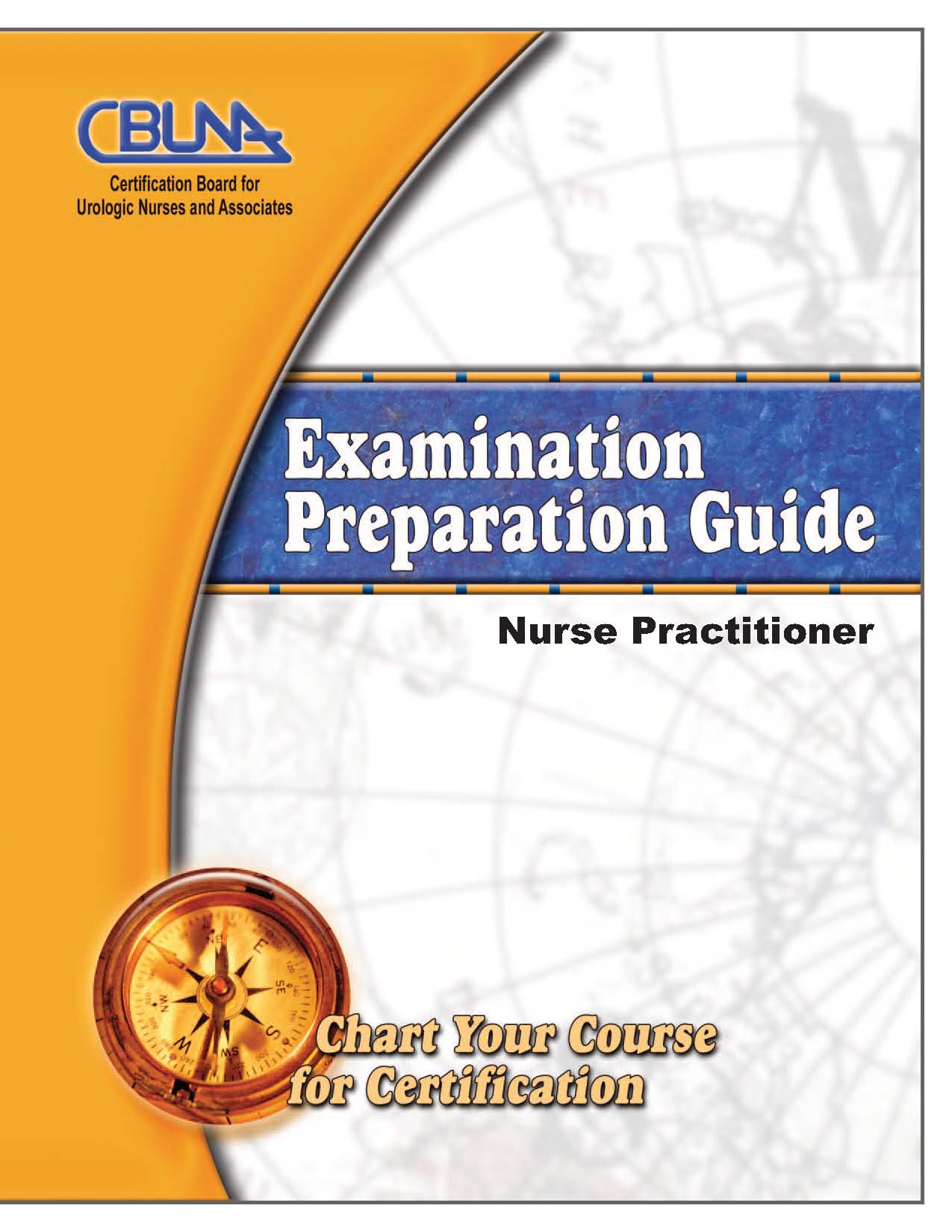
CUNP Prep Guide

Certified Urology Nurse Practitioner

This booklet offers you information and guidelines which can be used to prepare yourself to take the Nurse Practitioner exam. The contents does not imply successful performance on the examination.

The Examination Preparation Guide includes: 

  • Examination Blueprint
  • Examination Outline
  • Suggested Reading Material
  • Sample Questions
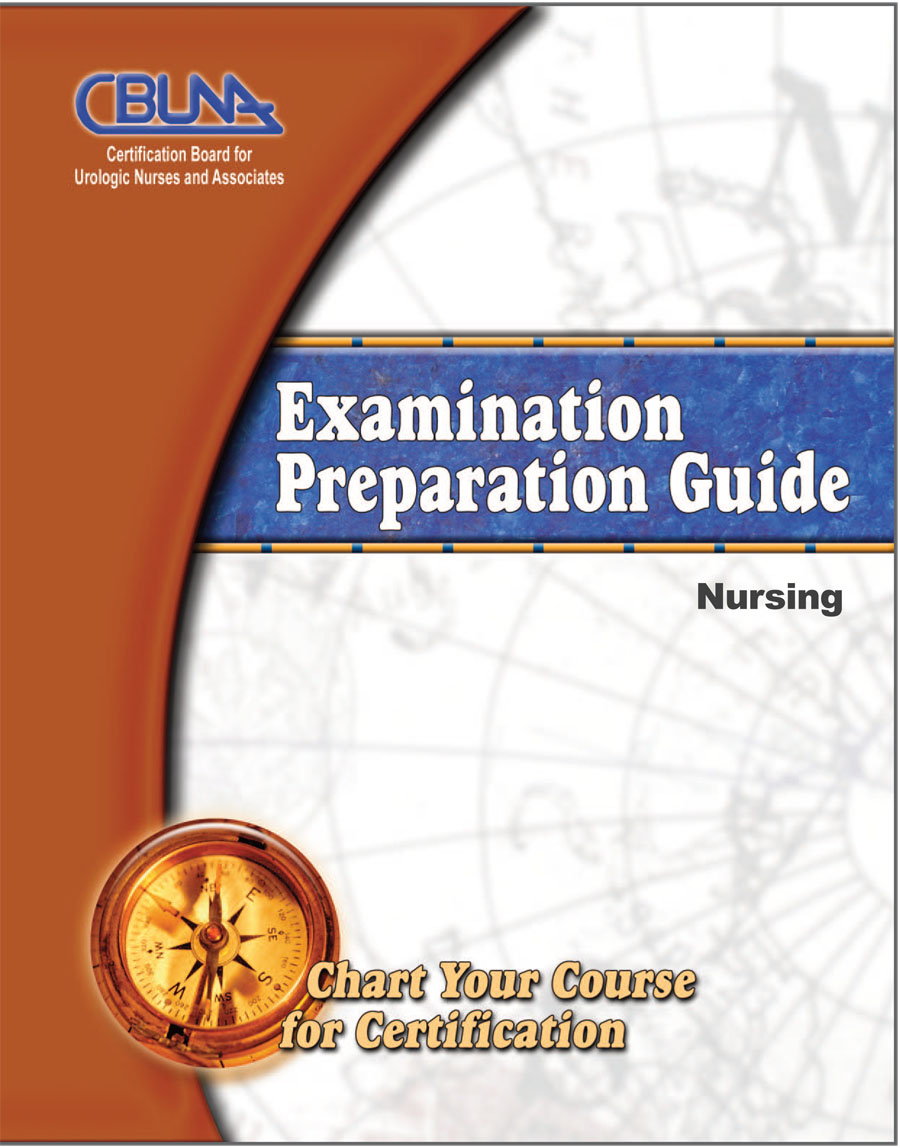
CURN Prep Guide

Certified Urology Registered Nurse

This booklet offers you information and guidelines which you can use to prepare yourself to take the Registered Nurse exam. The contents do not imply successful performance on the examination.

The Examination Preparation Guide includes:

  • Examination Blueprint
  • Examination Outline
  • Suggested Reading Material
  • Sample Questions

Exam Preparation Tips

Considering becoming certified? Don’t know where to start? Preparation and planning takes time, and we want to share advice on how to get started. Each year our test takers complete a survey giving us feedback on what was most helpful during their preparation. Based on these surveys, and our own personal experience, we want to provide you with the following advice:

  1. There are many options on how to prepare yourself for this examination. You have a choice of many urologic textbooks to use as your resource. As noted above, CBUNA offers an examination preparation guide for each test level that may be helpful in assisting you to prepare by offering: test taking tips, a list of recommended reading resources, exam outline, sample questions, and a test blueprint to assess your strengths and weaknesses.
  2. A majority of urology nurses do not have experience in all areas of urology. Some only work with men, others with women, and many have no pediatric experience at all. Recent practice analyses show us where nurses are working and what they are doing. As a result, our tests reflect this data, and there are very few questions on pediatric topics.
  3. Pick a date and a site for the examination.
  4. Explore our website and learn more about CBUNA and the exams. We have added many new sections to our site, including answers to frequently asked questions.
  5. Consider these test-taking strategies:
    • Prepare in advance. Avoid cramming. This is not the best way to prepare for any examination, as much of the information is never converted into long-term memory.
    • Make a study schedule. This will help keep you on track, and ensure that you have sufficient time to cover all the necessary topics.
    • Be selective about what you study. Be confident in what you already know and don’t waste time studying it. Aim to understand the information in other areas instead of simply memorizing it.
    • Quiz yourself periodically. This will help establish how successful your preparation has been.
    • Create a study group. Some adult learners find it very helpful to study in groups; this allows each member of the group to take advantage of other members’ expertise.
    • Read each item carefully. Formulate an answer before you look at the available choices. Compare the available options to what you think is the correct response, and be sure to read over all options before answering. Multiple-choice questions often require critical thinking.
    • Attempt to answer every item. If you are unsure, consider the nursing process and ”ABCs” of nursing practice. Choose the option that reflects good nursing judgment.
    • Skip questions if you need to. But check your answer sheet to make certain that numbers consistently match up.
    • Don't keep changing your answer. Your first answer is the one that is most likely to be correct . . . but do not be afraid to change your answer.
    • Get a good night’s sleep before the test.

Remember that these tests are constructed on a 3-year cycle, explaining why the tests do not contain questions regarding some of the cutting-edge procedures seen on the job or the newest medications. Before new modalities are considered appropriate for any certification examination, there must be time to establish that changes represent a move forward in patient care. With a plan and some time for preparation, anyone can be a successful examination candidate.

Finally, do not forget that all of us on CBUNA Board are an excellent resource. After all, we were once in your shoes! If you wish to contact us, please call the CBUNA National Office at 202-591-2470 or email us at CBUNA@cbuna.org.

Suggested Reading List

These texts may be ordered from the publisher or from a local medical bookstore. They may be available in your hospital or medical library. It is not suggested that you purchase all of these texts.

Study Texts

American Urological Association. (2017). Guidelines at-a-glance: A quick reference for urologists – 2017. Retrieved from http://www.auanet.org/guidelines

Gomella, L. (Ed.). (2014). The 5-minute urology consult (3rd Ed.). Philadelphia: Lippincott, Williams & Wilkins.

Hanno, P., & Wein, A. (2014). Penn clinical manual of urology (2nd Ed.). Philadelphia: Saunders Elsevier.

Lajiness, M., & Quallich, S. (Eds.). (2016). The nurse practitioner in urology. Switzerland: Springer International Publishing.

Maternik, M., Krzeminska, K., & Zurowska, A. (2015). The management of childhood urinary incontinence. Pediatric Nephrology ,30, p 41–50. DOI 10.1007/s00467-014-2791-x
McAninch, J.W., & Lue, T.F. (2013). Smith & Tanagho’s general urology (18th Ed.). New York, NY: Lange

Medical Books/McGraw-Hill Medical Publishing Division.

Newman, D.K., Wyman, J.F., & Welch, V.W. (Eds.). (2016). Core curriculum for urologic nursing. Pitman, NJ: Society of Urologic Nurses and Associates (SUNA).

Skidmore-Roth, L. (Ed.). (2016). Mosby’s 2016 nursing drug reference (29th Ed.). St. Louis: Elsevier Mosby.

Additional References

Urologic Nursing, the Official Journal of the Society of Urologic Nurses and Associates. Join SUNA or Subscribe

Banner
CBUNA


CBUNA is the only national certification body established to certify urologic nurses and associated allied health care professionals in urologic nursing practice.

A MESSAGE FROM THE CBUNA PRESIDENT


ChristyKreig

Specialty certification is a foundational achievement for Advanced Practice Nurses (APN), Registered Nurses (RN) and allied healthcare professionals who strive for optimal professional development and knowledge acquisition.

By earning certification through the Certification Board of Urologic Nursing and Associates (CBUNA), you will demonstrate your outstanding degree of knowledge and improve the caliber of care you deliver to patients and their families. From a legal standpoint, CBUNA certification may legitimize your specific role in the increasingly complex delivery of high-quality healthcare.

The CBUNA Board of Directors works diligently and prescriptively in collaboration with our testing agency, CNET, to ensure that CBUNA exams are fair, unbiased, and representative of current practice.

If you have two years of experience in Urology and are willing to commit to a course of study, WE BELIEVE in your ability to pass this rigorous exam. Please reach out to me personally if I can help you on your journey to urology certification through CBUNA.

Christy B. Krieg, MSN, FNP, CUNP, FAUNA
CBUNA President

Why Certify?

Certification is the tangible recognition of professional achievement and special competence in the practice of urologic care by nurses and technicians. Certification is a major step in your professional career and offers many benefits:

  1. Certification improves your skills and knowledge. As you prepare for certification, you will become familiar with topics that you do not routinely encounter in your everyday job that will add richness and depth to your knowledge base.
  2. Certification can improve career opportunities and advancement. Certification shows that you are willing to invest in your career and ongoing knowledge, and have demonstrated mastery.
  3. Certification may result in increased economic advantages. Some facilities offer bonuses or hourly differentials for certified individuals, and certification can serve as a point for negotiation and advancement in a yearly performance review.
  4. Certification demonstrates your commitment to the care of your patients. It validates your commitment to your chosen specialty, and reflects a higher standard of knowledge in your role.
  5. Certification enhances the professional image of your role. Certified individuals can serve as role models for others within the profession, as well as students of all healthcare disciplines.
  6. Certification reflects achievement on a both a professional and personal level. Because it is through a third party, certification substantiates that you have attained mastery of a particular set of specialty knowledge.
  7. Certification builds self-esteem. Certification defines you beyond your job description or past achievements, and is a reflection of your drive to establish your expert knowledge.
  8. Certification may lead to greater on-the-job responsibilities. Certification is a recognizable indicator of your willingness to invest in your own professional development, and certified individuals are likely to be more aware of changes and trends in their field.
  9. Certification allows peers to recognize you as an expert in your specialty field. Healthcare professionals, patients and their families will recognize that you have taken an additional step in your career and have additional expert knowledge.
  10. Certification grants you professional credibility. Certification is an impartial, third-party endorsement of your knowledge and experience. In the absence of any “residency” or educational post-degree certificate programs, certification is the single best way you can testify to your expertise.
Adapted from Quallich, S. (2012). Top ten reasons to become certified. Uro-Gram, 40(3), 15.


Prepare for the CBUNA Exams

Accreditation

About CBUNA's accreditation program for healthcare education and training providers

CBUNA Links with Health Care Industry and Organizations to Promote Excellence in Education

The Certification Board for Urologic Nurses and Associates (CBUNA) has expanded its mission to include the promotion of excellence in the clinical education/training programs offered by the health care industry and organizations (hereafter referred to as corporations).

In response to an identified need from corporations to achieve recognition of their industry associates as having completed an educationally sound program accredited by an external, non-biased organization, CBUNA designed and created an accreditation process. The process is divided into three stages.

In the initial stage, CBUNA reviews the educational program that has been designed and implemented by the corporation seeking accreditation. The Board specifically seeks to ensure that the program is educationally sound, reflects current standards for safe clinical practice, and offers a balanced presentation of all diagnostic or treatment modalities for specific clinical conditions or disorders. Based on results of the review, the corporation’s educators are provided an opportunity to revise any content that does not meet these criteria. Following revision, the educational program is reviewed by the Board for final approval.

The second phase of the process is a review of the testing materials used by the corporation. Testing materials need to encompass the range of content presented in the program. Ideally, the testing material is comprised of multiple-choice questions. There is no minimum number of questions required, but there should be enough to adequately test the material presented. There also needs to be a sufficient number of questions that the corporation can vary for different classes, ensuring that successful completion of the test reflects mastery of the content covered in its educational program. The Board will consult closely with the corporation seeking accreditation to establish a fair and standardized testing procedure and to provide advice regarding standards for testing, and for test security as needed.

The final phase of the accreditation process is a site visit by a member of CBUNA. This visit ensures compliance with the educational and testing process, and serves as an opportunity for the educational department of the corporation to review questions related to the process of accreditation.

The duration of accreditation is a period of 3 years. At that time the corporation is offered the opportunity for re-accreditation. This process allows the corporation to review and to update its educational materials and testing procedures to reflect current standards.

CBUNA is pleased to collaborate with corporations to strengthen their educational and testing programs for industry associates. We strongly believe this program benefits corporations, CBUNA, and most importantly, the patient who is assured competent care delivery from an industry associate who has completed a testing process demonstrating mastery of these skills and knowledge.

Accreditation $7,500 + site visit expenses
Reaccreditation $5,000 + site visit expenses

A nonrefundable fee of $2,000 will be required before the board begins work to evaluate a new program. This amount will be applied to the $7,500 fee. Accreditation fee to be paid in full prior to scheduling a site visit.

If you have questions or are interested in pursuing accreditation, please reach out to the CBUNA office at cbuna@cbuna.org or 202-591-2470.